
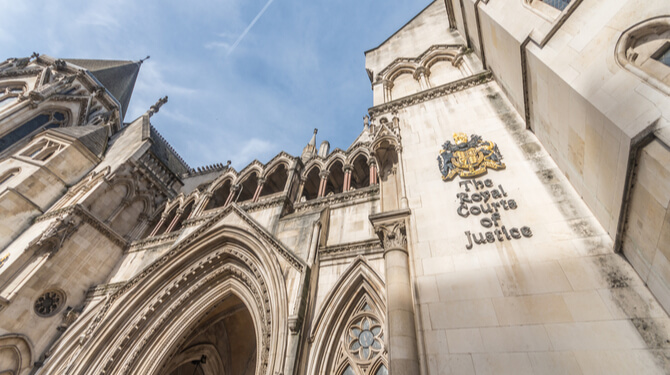
From January 2026, the introduction of the CPR Practice Direction 51ZH shifted disclosure rules governing commercial litigation towards enhanced transparency.
Practice Direction 51ZH (“PD”) was largely prompted by Lady Hale’s judgment in Cape International Holdings Ltd v Dring [1] in which, quoting Lord Hewart CJ in R v Sussex Magistrates, ex parte McCarthy [2], Lady Hale asserted that “justice should not only be done, but should manifestly and undoubtedly be seen to be done”. Hence, the aim behind the new PD is to make non-party access to documents filed at court less onerous, in accordance with the principle of open justice.
The scheme will be piloted for two years, with a review expected after the first 6 months. While the pilot will apply to public proceedings in the Commercial Court (including the London Circuit Commercial Court) and the Financial List, the accompanying Guidance Note anticipates future expansion into other Business and Property Courts.
It is important to note that the pilot supplements, rather than replaces, the current law outlining the disclosure of court documents to non-parties.
The Law
Prior to January 2026, CPR 5.4C provided non-parties access to:
- Statements of case; and
- an order or judgment made publicly, regardless of whether it was made at a hearing.
Where a non-party sought to access documents outside of this scope, permission was granted at the court’s discretion.
Contrastingly, under the new PD, the default position of seeking permission has been replaced by an automatic right to access “Public Domain Documents”.
Paragraph 8 of the new PD defines “Public Domain Documents” as:
- Skeleton arguments;
- written opening and closing submissions;
- other written submissions provided to a judge and relied upon in the hearing;
- witness statements and affidavits (excluding any documents appended or annexed to them);
- expert reports;
- any other documents critical to the understanding of the hearing ordered by the judge at the hearing to be a Public Domain Document; and
- any documents agreed by the parties to be Public Domain Documents.
The new PD, however, does not affect the validity of any existing confidentiality orders, or restrictions imposed by the court. Where such orders are in place, they continue to override the obligation to file, or disclose Public Domain Documents.
The Procedure
Previously, non-parties were required to apply and pay a relevant fee through CE-File to access court documents.
The pilot modifies this public-facing aspect of CE-File, enabling non-parties to view the predefined Public Domain Documents without court permission. The requirement to pay an applicable fee for access however, remains unchanged.
Parties to the proceedings are required to file their Public Domain Documents on CE-File within the relevant filing period, being 14 days following the date the document was first used, or referred to during proceedings (save for skeleton arguments and written/closing submissions).
Filing Modification Orders
The PD allows parties to the proceedings to seek Filing Modification Orders (“FMO”) in respect of any document that would otherwise constitute a Public Domain Document.
An FMO may:
- Prevent a non-party from obtaining a copy of the document;
- waive or restrict the filing requirement;
- permit compliance only once the document has been edited or redacted;
- extend or amend the filing period; or
- make any other order the court considers appropriate in respect of that document.
These orders may be sought through a written request by any party to the proceedings, an application by a non-party named in a Public Domain Document, or by the court of its own volition.
A request or application for an FMO must be lodged before the commencement of the filing period.
Implications and Considerations
Evidently, the scope of documents now available to non-parties is much broader than those outlined under CPR 5.4C. This represents a significant shift towards open justice and transparency, but also introduces practical and interpretative challenges.
Interpretative challenges
Particular attention should be given by parties to what qualifies as “critical to the understanding of the hearing”. This inclusion gives the court considerable discretion in determining what constitutes a Public Domain Document. While skeleton arguments and witness statements are clearly defined, what is deemed critical to the understanding of a hearing could vary depending on the complexity of the case. In highly technical disputes, this may result in a greater number of documents being considered critical to the case’s understanding.
Practical challenges
- Witnesses and Experts: The inclusion of witness statements and expert reports as Public Domain Documents may make witnesses and experts less forthcoming where there is concern for reputational interests and public scrutiny.
- Considering Alternative Dispute Resolution (ADR): Greater transparency may push parties toward ADR methods which offer greater privacy, such as mediation or arbitration. Similarly, pre-hearing settlement offers should be considered at an early stage where parties seek to avoid public exposure of sensitive information.
- Unsuccessful FMOs: The accompanying Guidance Note makes clear that circumstances in which public access to documents would be considered inappropriate are expected to be rare. Accordingly, parties should approach disclosure with reputational and commercial interests in mind. For example, drafting submissions with an awareness of potential public scrutiny.
- Administrative Burden: The obligation to file Public Domain Documents will increase the organisational burden on parties. With sanctions applicable where filing orders are not complied with, the effects of non-compliance with the new pilot necessitate that parties are well-prepared from the outset.
[1] [2019] UKSC 38, 1
[2] [1924] 1 KB 256, 259